Publications
Links to our publication repository can be seen below.
Articles vary in nature from opinion pieces and patient experiences to clinical and governance research.
This page will be updated when links to publications become available.
Urology & Incontinence Care Today
Changing technology in urology: a case study
In a companion piece to their previous article, Abdul Seckam, Stephen Mitchell and Heidi V Tempest discuss the benefits and challenges of using teleurology and outline a case study where their digital urology service was used to address a backlog of patients waiting for a urology assessment.
Journal of General Practice Nursing
Stroke and Technology: A Revolutionising Dynamic
Stroke is a leading cause of disability and death worldwide, and as the population ages, the number of stroke cases is expected to increase significantly. In the UK alone, a 49% increase in the prevalence of stroke is predicted between 2025 and 2035, putting a strain on healthcare systems and resources (King et al, 2020). However, with advancements in technology, particularly in the field of artificial intelligence (AI), there is hope for improving outcomes for stroke patients.
Urology & Incontinence Care Today
Technological developments in Urology
Over the past few decades, advances in technology have revolutionised the field of urology. From diagnostic tools to surgical techniques, these innovations have greatly improved the way urological conditions are diagnosed and treated.

Physiotherapy Journal
Experiences and perceptions of using a digital health intervention
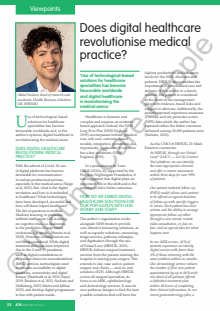
Technological-based solutions for healthcare specialities have become favourable worldwide, and digital healthcare is revolutionising the medical arena. However, we need to find out whether and how it is going to help patients. One innovation in healthcare is to change outpatient care using technology so that patients can be seen, diagnosed and managed with fewer hospital visits.
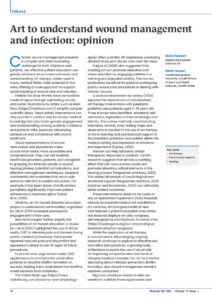
Art to understand wound management and infection: opinion
Chronic wound management presents a complex and often frustrating challenge for both clinicians and patients. Yet, effective patient education can greatly enhance wound care outcomes and understanding. Art therapy, widely used in many medical fields, holds potential in this area, offering a novel approach to support understanding of wound care and infection.
HBSUK
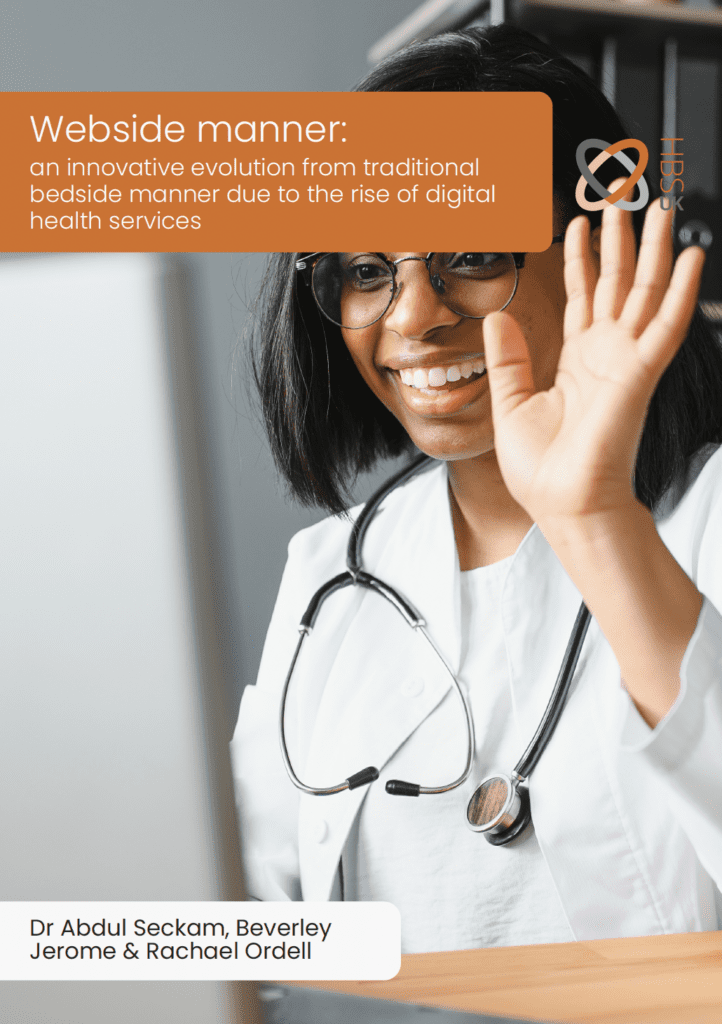
Webside Manner
Dr. Abdul Seckam, Beverley Jerome, and Rachael Ordell exploress the transformation of healthcare interactions in the digital era. It introduces the concept of “webside manner,” an adaptation of traditional bedside manner tailored to the virtual consultation environment. With the shift to digital health services, particularly accelerated by the COVID-19 pandemic, clinicians are challenged to maintain effective communication and empathy through screens.
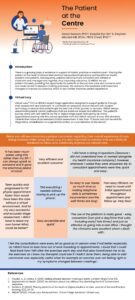
The Patient at the Centre
There is a growing body of evidence in support of holistic practice in medical care. Placing the patient at the heart of clinical interventions has positive implications and benefits for health systems and patients.
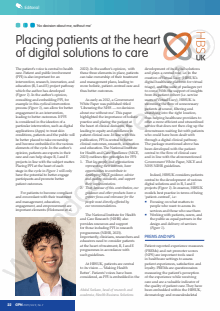
JOURNAL OF GENERAL PRACTICE NURSING
Placing patients at the heart of digital solutions to care
The patient’s voice is central to health care. Patient and public involvement (PPI) is also important for an intervention, research, innovation, and education (R, I and E) project pathway which the author has developed (Figure 1). In the author’s opinion, consulting and embedding PPI, for example in this cyclical intervention process (Figure 1), can allow for better engagement in an intervention, leading to better outcomes.
JOURNAL OF GENERAL PRACTICE NURSING
Does digital healthcare revolutionise medical practice?
Use of technological-based solutions for healthcare specialities has become favourable worldwide and, in the author’s opinion, digital healthcare is revolutionising the medical arena.